Temple of Heaven Audio Guide
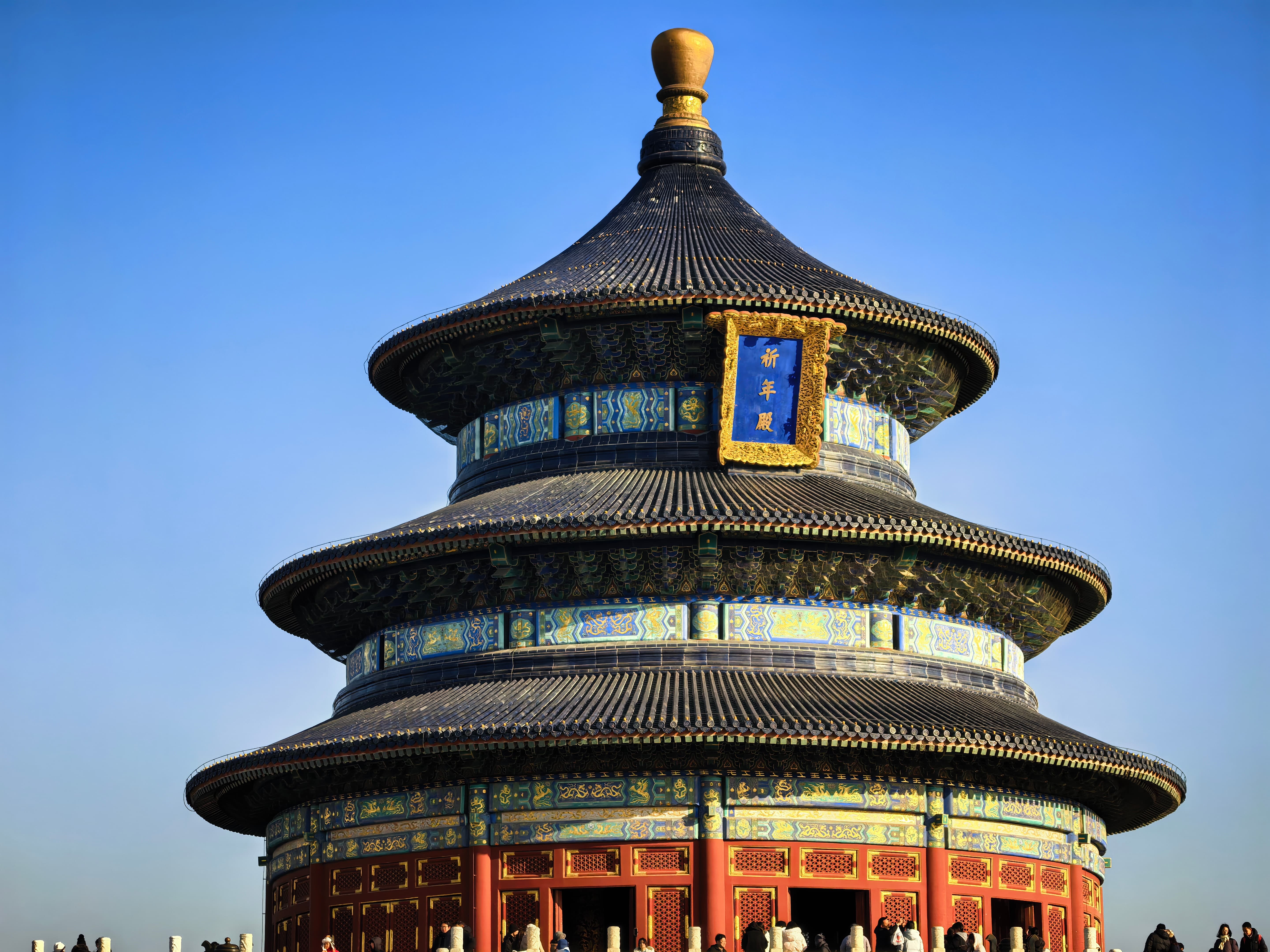
Welcome to the Temple of Heaven
The Temple of Heaven, founded in 1420 during the Yongle Emperor's reign, is the largest ancient sacrificial complex in China and a UNESCO World Heritage Site. It was the place where emperors of the Ming and Qing dynasties offered sacrifices to heaven and prayed for good harvests. With its unique architectural style and profound cultural connotations, the Temple of Heaven has become one of Beijing's iconic attractions.
Temple of Heaven Audio Guide
1. Welcome to the Temple of Heaven
2. Circular Mound Altar
3. Echo Wall
4. Imperial Vault of Heaven
5. Red Stair Bridge
6. Hall of Prayer for Good Harvests
7. Imperial Heavenly Hall
8. Seventy-Two Corridor
9. fasting Palace
10. Music Office
11. Sacrificial Animal Yard
12. Sacrificial Animal Slaughter Pavilion
13. Dressing Platform
14. Chengzhen Gate
15. Lingxing Gate
16. North Heaven Gate
17. Double Ring Longevity Pavilion
18. Rose Garden
19. Hundred Flower Garden
20. Ancient Cypress Forest
21. Nine Dragon Cypress
Scenic Area Map
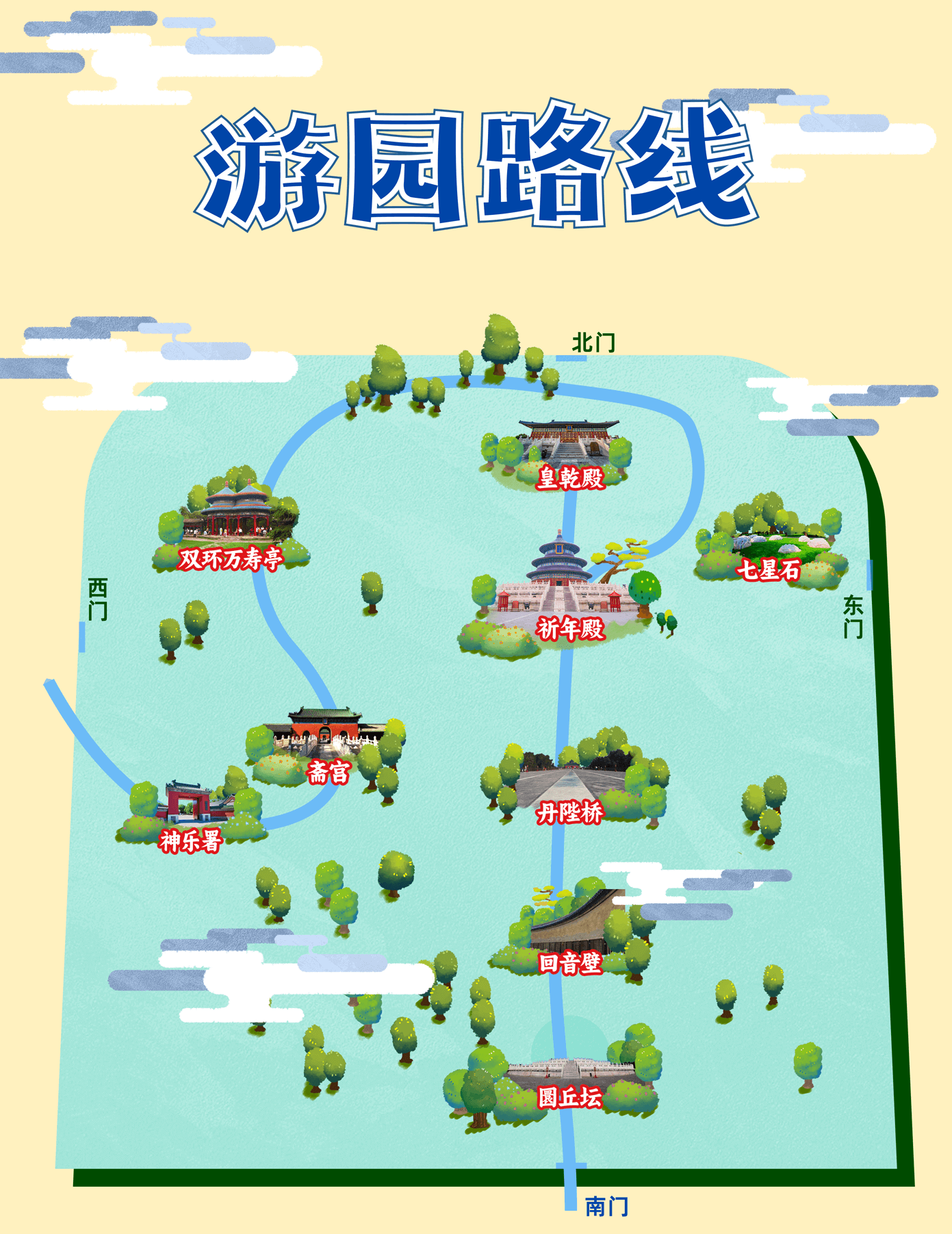
Featured Attractions
Hall of Prayer for Good Harvests
The Hall of Prayer for Good Harvests is the main building of the Temple of Heaven, built in 1420 during the Yongle Emperor's reign. It was the place where emperors of the Ming and Qing dynasties prayed for good harvests. The hall is 38 meters high and 32.72 meters in diameter, with a triple-eaved conical roof covered with blue glazed tiles, symbolizing the sky. Inside the hall, there are 28 nanmu pillars representing the stars in the sky.
Echo Wall
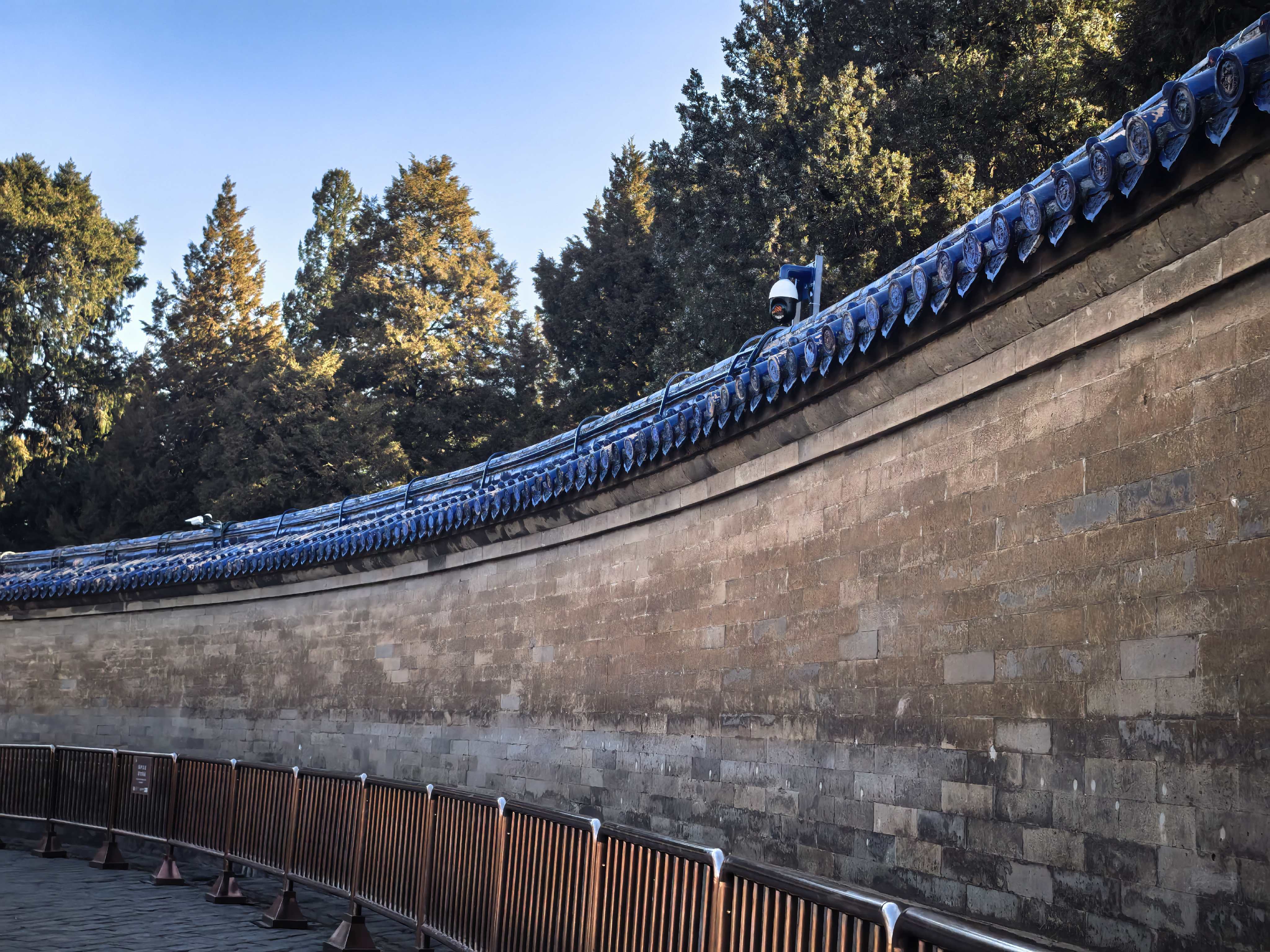
The Echo Wall is the enclosure wall of the Imperial Vault of Heaven, built in 1530 during the Jiajing Emperor's reign. The wall is 3.72 meters high, 0.9 meters thick, and 61.5 meters in diameter, built with tightly fitted brickwork. Due to the wall's curvature conforming to acoustic principles and the smooth,整齐 surface, sound can be continuously reflected along the wall, creating an echo effect.
Imperial Vault of Heaven

The Imperial Vault of Heaven is the place where the tablets of the Heavenly Emperor and the emperor's ancestors were stored, built in 1530 during the Jiajing Emperor's reign. The building has a circular conical roof covered with blue glazed tiles, and inside it enshrines the tablet of the Heavenly Emperor. The Imperial Vault of Heaven is exquisitely designed and structurally rigorous, a masterpiece of ancient Chinese architecture.
Visitor Information
- Opening Hours: Winter (Nov 1 - Mar 31) 8:00-17:00; Summer (Apr 1 - Oct 31) 6:00-18:00 (subject to official announcement)
- Recommended Visit Time: 2-3 hours
- Notes: Please keep quiet when entering the scenic area, respect historical culture, do not make loud noises; do not touch or climb cultural relics; do not smoke or eat in the scenic area; do not use flash photography
Transportation
- Subway: Take Line 5 and get off at Temple of Heaven East Gate Station, or Line 8 and get off at Tianqiao Station.
- Bus: Take bus routes 6, 34, 35, 36, 39, 41, 43, 60, 116 and get off at Temple of Heaven North Gate Station or Temple of Heaven East Gate Station.
- Self-driving: There are multiple parking lots around the Temple of Heaven, but parking spaces are tight during peak hours. Public transportation is recommended.
Recommended Routes
- Classic Route (2 hours): South Gate → Circular Mound Altar → Echo Wall → Imperial Vault of Heaven → Red Stair Bridge → Hall of Prayer for Good Harvests → Imperial Heavenly Hall → North Gate
- In-depth Route (3 hours): South Gate → Circular Mound Altar → Echo Wall → Imperial Vault of Heaven → Red Stair Bridge → Hall of Prayer for Good Harvests → Imperial Heavenly Hall → Seventy-Two Corridor → Fasting Palace → Music Office → Rose Garden → North Gate